About us
St. Verena's Outreach Program is a volunteer-led program of St. Mary Coptic Orthodox Church in Raleigh.
Mission statement
At St. Verena's Outreach Program, our mission is to serve the homeless, the hungry, and the vulnerable with dignity, compassion, and unwavering faith. Rooted in the Coptic Orthodox tradition and inspired by the life of St. Verena — a saint known for her service, healing, and mercy — we are committed to being the hands and feet of Christ in a world that desperately needs love.
We believe every person is made in the image of God and is deserving of care, respect, and hope. Whether someone is living on the street, struggling to feed their family, or facing a personal crisis, we meet them where they are — physically and spiritually — offering food, clothing, hygiene essentials, and the assurance that they are not forgotten.
We are a 100% volunteer-led, donation-driven service program of St. Mary Coptic Orthodox Church. Every dollar and every item we receive is passed directly to those in need. There are no salaries, no admin costs pulled from donations, and no resources wasted on anything but the mission itself. We believe in radical transparency and radical generosity. When you give to St. Verena's, you are giving directly to the people we serve — no middleman, no delay.
Our work is born out of a deep commitment to faith-driven action. Inspired by Matthew 25:40 — "Whatever you did for one of the least of these brothers and sisters of mine, you did for me" — we take seriously our calling to care for those the world overlooks. Just as St. Verena served in humility, never seeking recognition, we too strive to serve in quiet strength and grace.
Our focus areas
- Homeless outreach: Distributing food, clothing, hygiene kits, and blankets on the streets, in shelters, and wherever people need help.
- Seasonal drives: Organizing monthly collections for food, clothing, and hygiene items in partnership with our local churches and communities.
- Emergency response: Quickly mobilizing volunteers and resources during crises such as extreme weather, fires, or community displacement.
- International giving: Extending our mission beyond local borders to support those in extreme poverty, especially in underserved areas of Africa and the Middle East.
We are a small program, but we are guided by a big vision — to live the Gospel through action and remind people of their worth. This work is not about charity in the traditional sense. It's about human connection. It's about walking with people in their pain and showing them that someone cares. It's about reminding the forgotten that they are still seen.
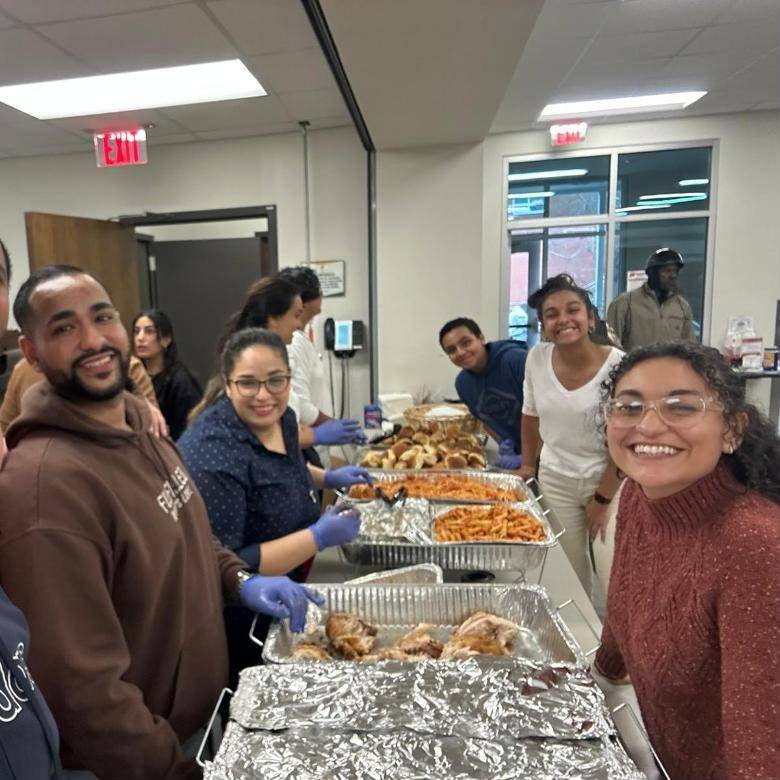
We don't operate from a distance — we are present in the work. We shake hands, share meals, listen to stories, and often shed tears alongside those we serve. We believe that transformation doesn't come from just handing out a sandwich — it comes from being present, being real, and being consistent.
Our values
Faith first
Everything we do is rooted in our Coptic Christian faith. We serve with prayer, humility, and hope.
Service without self-gain
No one in our program is paid. We give because Christ gave first.
Dignity in every interaction
We never reduce people to their needs. We see the person behind the pain.
Transparency always
Every gift given is used for exactly what it was intended for — direct service.
Looking ahead
We hope to expand our reach — not to grow our name, but to grow our impact. We envision more organized meal programs, deeper partnerships with local shelters, spiritual support initiatives, and long-term care strategies for those ready to rebuild. But no matter how large we grow, we will always stay true to our roots — serving in simplicity, humility, and love.
We invite you to join us — whether through donating, volunteering, or spreading the word. Every can of food, every hygiene kit, every hour of your time matters. Together, we can reflect Christ's light in dark places.
At St. Verena's Outreach Program, we do not serve for recognition or reward. We serve because it is our joy, our duty, and our calling. We are a small vessel, but God uses small vessels to do great things. May He continue to bless this mission, and may all we do be to His glory.
Who was St. Verena?
And why our program carries her name.
The story of Saint Verena is a remarkable tale of faith, compassion, exile, and humble service. She is especially venerated in the Coptic Orthodox Church (where her feast is celebrated on September 14 / 4 Thout), as well as in the Roman Catholic and Eastern Orthodox traditions (often on September 1).
A daughter of Thebes
Saint Verena was born around the year 260 AD in Thebes (modern-day Luxor region in Upper Egypt), to a noble Christian family. Her name "Verena" means something like "good fruit" or "dainty fruit" in reference to her virtuous character. From a young age she was raised in deep Christian piety — she loved prayer, reading the Scriptures, serving in church, sewing vestments for priests and deacons, and keeping the church clean.
The Theban Legion
During the reign of Emperor Diocletian (when intense persecution of Christians occurred), Verena became associated with the famous Theban Legion — a unit of about 6,000 Christian soldiers from Egypt. Her relative (often described as her cousin or kinsman) was Saint Maurice (also called St. Mauritius), the commander of this legion.
The Theban Legion was sent by the Roman authorities to what is now Europe (the Alps region, around modern-day Switzerland and the upper Rhine) to help suppress a revolt. When ordered to sacrifice to pagan gods or to persecute local Christians, the soldiers — including Maurice and most of the legion — refused and were martyred around 286–287 AD (the famous martyrdom at Agaunum / Saint-Maurice).
Verena, who had accompanied the legion (likely to serve as a nurse and healer for the soldiers), survived the massacre. Mourning her kinsmen and possibly fearing further persecution in Egypt, she chose not to return home. Instead she traveled deeper into what is now northern Switzerland and settled near Zurzach (on the Rhine) and later in other areas like Solothurn.
A life of quiet service
There she lived the rest of her life as a consecrated virgin and hermit, mostly in a simple cave. She dedicated herself to:
- Prayer and fasting
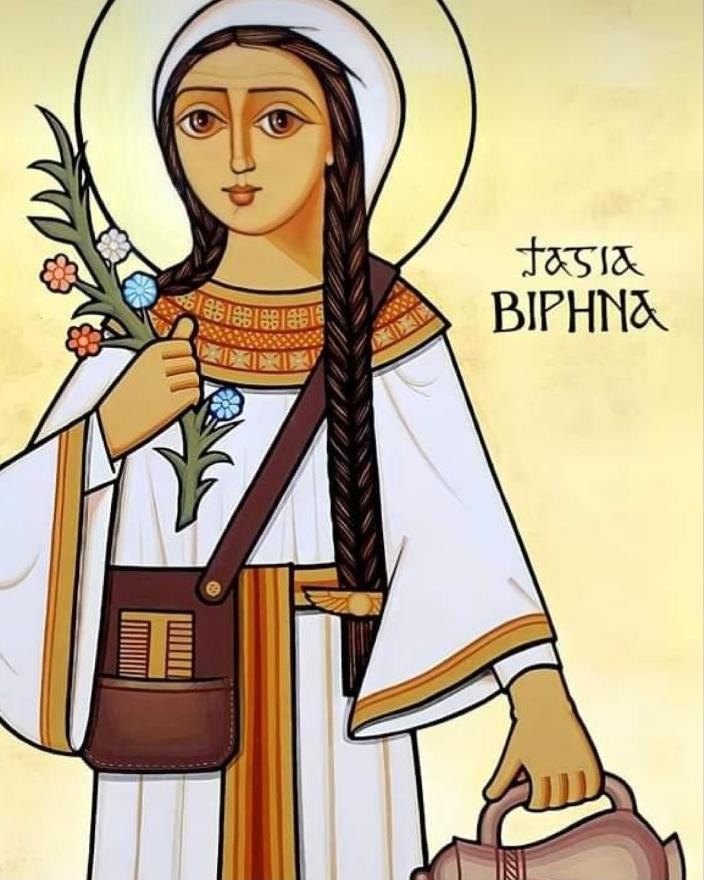
- Caring for the sick, especially lepers (she is often depicted with a jug of water and bread, symbols of her care for the afflicted)
- Teaching hygiene, cleanliness, and practical Christian virtues (she is remembered in Coptic tradition as a "teacher of cleanliness and hygiene")
- Mentoring and guiding young girls in chastity, faith, and good works
- Serving the poor and local Alemannic (Germanic) people
Her gentle, charitable life, combined with reported miracles of healing, gradually won many hearts and helped spread Christianity among the pagan Alemanni tribes in the region.
After many decades of this quiet but powerful witness, Saint Verena reposed in peace around 344 AD. Her tomb in Zurzach became a pilgrimage site, and churches were later built in her honor across Switzerland, southern Germany, and Egypt.
Her legacy today
Today she is especially loved as:
- Patron of nurses and those who care for the sick
- Patron against leprosy and skin diseases
- A model of humble service, purity, and cross-cultural missionary love
Her icon usually shows her as a dignified Egyptian woman holding a water jug and loaf of bread (signs of her charity), sometimes with a comb (for hygiene and teaching cleanliness) or near a cave.
Her story bridges Egypt and Switzerland in a beautiful way — an Egyptian Christian woman who became one of the most beloved saints of the Alpine region through simple love and faithfulness.